October 3, 2011

The Mighty Archetype: Broody Jerks with Hearts of Gold

No, the 'Broody Jerks with Hearts of Gold' isn't an official archetype name :)

In manga, I have always been drawn to the same sort of character--dark, broody, jerks who hide their high morals and tragic pasts behind a bad attitude and fortified emotional walls. A lot of times, they also have fabulous hair and carry a sword.

Exhibit A: Sasuke Uchiha from Naruto

*Official art from the creator Masashi Kishimoto*

        Sasuke, whose entire clan was murdered when he was a child by his older brother, and has spent every minute of every day since training for the day when he'd be strong enough to face his brother and avenge their clan. He's antisocial, speaks his mind, has a superiority complex and is quick to insult others. But he's also just as quick to risk his life in order to protect his teammates, and he did nearly die to protect Naruto, the title character.
        At the moment, he's in the middle of a huge character arc in which he has become Naruto's enemy. But I have complete confidence that, by the end of the series, Sasuke will find the right path and redeem himself.


Exhibit B: Yuu Kanda from D.Gray-man


*Official art from the creator Katsura Hoshino*

        He's the result of an experiment, with little memory of his previous life aside from the vision of a woman he has devoted himself to finding again. He's technically a failed experiment and he was almost disposed of, but his first and only friend (a fellow experimentee) saved him. That same friend later went mad and Kanda was forced to kill him. Despite his bitterness, he still fights to protect people from the akuma (demons) and remains loyal to the Black Order, the same religious organization that created him.

What draws me to this archetype is that s/he is so intensely layered. Sasuke and Kanda have both buried their pain beneath these rude, arrogant exteriors that shatter in the face of their pasts. And with such difficult pasts, it would have been easy for them to have grown distorted and corrupt as they pursued their goals, but they didn't. They clung to their morals, to the good in them, and it's the one defining thing that sets them apart from the antagonists.

How do you guys feel about this archetype? And what's YOUR favorite archetype?

Who are some literary characters you can think of that fit this archetype?

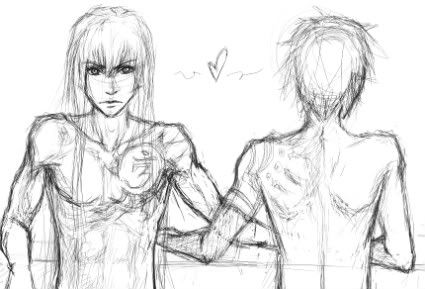
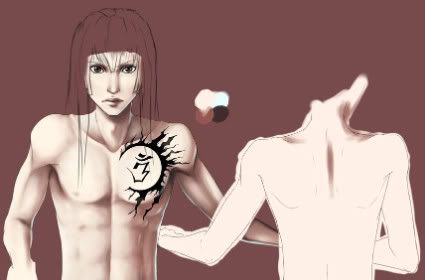
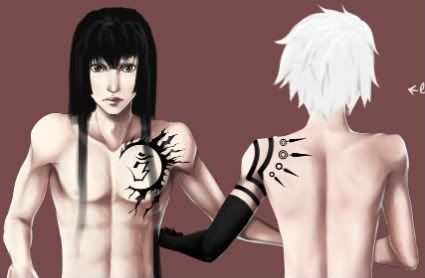
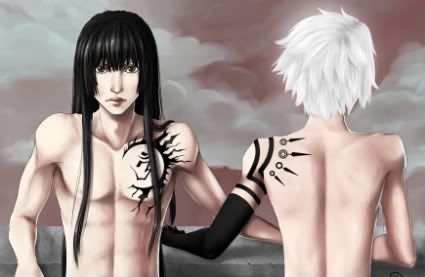
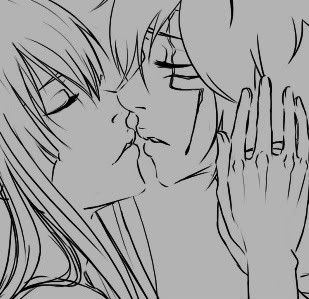
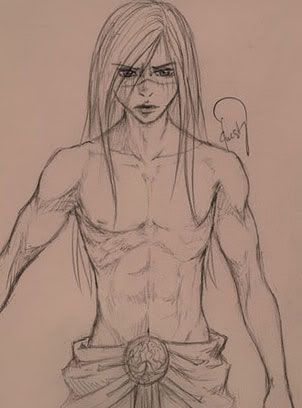
Naturally, I've drawn my two favorite swordsmen:


Have a great week! ♥

September 26, 2011

The Handy Book of Villainous Dialogue

My crit partner Anna wrote a fun and informative blog post last week about antagonists and dialogue.


One of the danger zones when fleshing out characters is the overuse of cliches and cliche-like dialogue. The heroes talking like heroes, the damsel in distress talking like damsels in distress, and the villains talking like, well, the villains. *laughs* This creates a one-layered depth to the character - something that would either:
a) incite some eye-rolling from the reader
b) make them stop reading completely because the characters seem so predictable or
c) wonder what the hell they're still doing reading something that feels like it's been overdone loads of times when they could be watching the new episode of True Blood instead.
-.-

All those aforementioned things = BAD

Check it out

Have a great week, guys!

September 19, 2011

Beta Match - Are you looking for a critique partner or a beta reader?

Rachel Harrie, our Campaign General, has a Beta Match post for writers looking for critique partners and/or beta readers. I thought I'd take this opportunity to refresh an old post of mine about the value of CPs.

So What Makes a Good Crit Partner?

Well, that answer depends on what you want =D

Better bloggers have said this before, but I think it bears repeating. When looking for a crit partner, keep in mind the following:

1. Goals - What do you want from a CP? Frank, brutally honest feedback? Line editing? A friend and cheerleader? Your goals should match up, at least mostly.

2. Understanding - Even if your goals match up, it doesn't help if you don't click as people. No one wants to take critique from someone they don't respect or like (no matter how accurate the critique might be).

3. Skill - Ideally, you want a CP who is either a better writer than you are or who is at the same level as you. I say this because I've improved by reading those better writers, and if I could get their feedback on my writing? Score! But with a CP at the same level, you get to learn together, and that can oftentimes be even more rewarding. Of course, I believe that every writer has something unique to offer so as long as you can find that CP who makes you look at your manuscript in a new and better way, I'd say you're fine =)

Personally, the best thing about having more than one crit partner is that each one tends to have their own strengths and weaknesses, and there's a really neat balance that forms. I have something to learn from all of my CPs, and that's what I love every time I pick up one of their chapters to read.

Great places to find crit partners:
Rachel Harrie's Beta Match
Maggie Stiefvater's 2011 Critique Partner Love Connection
YALitchat.org's Crit Seekers Group
Adventures in Children's Publishing: Alpha & Beta Reader Exchange
Natalie Whipple's Crit Partner Classifieds
Nathan Bransford Forums
Let the Words Flow Crit Partner sign ups

CPs: Friends and Comrades in Arms. Or like a squad of vampire hunters--you can always rely on them to stake you if you f#@! up and get bitten ♥

Good luck finding yours! ♥

September 12, 2011

When Music and Writing Collide - by Anna

Today, I'd like to welcome my first guest post, woo! Meet my fantastic critique partner and friend Anna from Anime's Musings. If you've got time, please stop by her blog as well and check it out. I love her posts!

---

When Music and Writing Collide by Anna

Musical impacts on writing projects are often tell-tale. More often than not, for those that work with, live, and breathe music, there isn't a single scene written that isn't fueled by its influences. This isn't true for all writers, however, in my experience, most write with the help of those muses. Melodies could be playing quietly in the background to drown out all other noise, or blaring inside the writer's head with the help of trusty earbuds, but always ever present.


Music has always been present in everything I've ever written. Actually, it's present in everything that I do. I can never go anywhere without my iPod and there is never a car ride that goes without tunes. I find that the type of music I listen to always sets my mood. This is a good preparation for any scenes that I need to write or emotions that I want to convey to the reader through the pages. The varying beats and rhythms in each song tell a different story and in turn, help the writer to incorporate those differences in their own story. Ever been blood red pissed off and turned on Yiruma's River Flows in You or Debussy's Reverie? Or emo sad and turned on Train's Hey Soul Sister? I don't know about you, but the aforementioned songs are a few examples of ones that instantly change the mood I'm in.


Along with mood setting, music also helps with thought processing. I always have a jumble of thoughts floating in my head (okay, more like beating the crap out of each other for space in my head *laughs*), and music helps to act as an organizer, a sifter of sorts, so that I would be able to pull out those thoughts that I need for whatever I'm doing at the moment. This goes for all activities, but for the purposes of this post, we'll focus on writing.

Have you ever had an instance happen when you hear a song from your past and you're instantly reminded of an event? It's because we're programmed to connect our senses to different catalysts. Music is a catalyst. We immediately connect it with events, with emotions, with certain people - depending on what was happening at the time we heard the particular song.

I've gotten accustomed to assigning songs to different scenes that I write. Most times, in preparation for a particular scene or to help me pick back up from where I left off in the scene, I use the song to get my mindset back to that time, that place, with those characters, and the emotions they were feeling when we last parted.

How does music tie into writing for you? Is it helpful when constructing scenes, plots, characters, etc.? Do you work better with or without it?

---

September 5, 2011

Drafting and Editing from Artwork to Writing

Happy Labor Day! ♥

-----
In the first draft of a wip, I write quickly. I don't focus on details, but I give a general idea of what I want to get across. Emotion is at its most basic. Stage direction is kept to a minimum. Setting is bare bones, and the dialogue is often stilted and unnatural. As long as I get down a general sense of setting and what needs to happen both internally and externally to move the story along then that's all I need for the time being.

Just like in writing, when I draft a new art piece, I start messy. Quick, unrefined lines. Basic outline. Overall flow. No real idea yet of a background, but an idea of my light source and what I want to convey.

I am going to let you guys see a tiny snippet of the first draft of my wip to demonstrate. Be warned, it's pretty awful lol.

First drafts:
Writing:
He grinned and gestured with his head for me to follow him. We headed down the river, along the opposite bank across the docks. The Labyrinth loomed behind us as the river snaked north and the continued east towards the old freight yard. Like the Labyrinth, the residents here lived in boxcars, but they were place in rows, one level only, and with enough space between them to provide an illusion of property. It wasn't much, but Avan had beamed the day he told me he'd moved out of the apartment above his dad's shop.

Terrible descriptions. Typos. Flat. Blegh.

Art:


Messy. Rough lines. Basic idea.

On my second draft, I'll typically rewrite the sentences, this time choosing my words more carefully. I'll flesh out the descriptions to paint the image of the scene I initially had in my head.

In art, likewise the first I do is redraw the lines. Clean lines this time. Then I begin to block in color and work in large details at first before narrowing down on the finer ones.

Second drafts:
Writing:
He grinned and, once we reached the other side of the river, gestured with his chin for me to follow. We walked along the bank, the waning light turning the river to ink. We kept above the sinking mud and the stripped trees that stood like pale corpses in the gloom. The Labyrinth loomed behind us like a black shroud across the sky as the river turned north, and we continued east towards the freight yard. Like the Labyrinth, the residents there lived in boxcars, but they stood in neat rows, one level only, and with enough space between each to provide the illusion of personal property. It wasn't much, but the happiest I'd ever seen Avan was the day he moved out of the apartment above his dad's shop.

Better, but now it feels too wordy. I will have to refine in my next draft and be even pickier about my word choices.

Art:


Clean lines. Color and light source are laid out.

With each pass, I refine and refine. Add details. Take details away. Make sure the whole picture/scene blends together.

Keep going until you're done!


FINAL:


Of course, my wip isn't complete yet so I don't have a final scene to show you =P But you guys get the idea ♥

Any of you willing to share a paragraph of a first draft and then compare it with a recent version? *bats eyelashes*

Have an awesome week, guys! ♥

August 8, 2011

On the Inequality of Switching Gender Roles

Caveat: I'm not saying this is how EVERYONE thinks. There are wonderful, open-minded, and thoughtful writers and readers out there. These are simply my observations about the vast majority of many blogs and articles I've read.

You see a lot of applause given to female characters who defy the conventions of traditionally female roles. Example? Katniss Everdeen, the consummate hunter. The provider, breadwinner, protector. Practical. Aloof. A little emotionally constipated, which only seems to make her more endearing.

But why is it that, when a male character (particularly the main protagonist) falls too far from his traditional roles, it doesn't garner the same level of applause, if ANY? Make a male character sensitive and a bit clumsy and, suddenly, he's just not MANLY enough. Or *gasp* he's a WIMP. And he will only shed that stigma when he goes out and kills something with his hands! As if a man's character should be defined by his physical prowess and little else.

If the male character in question is a side character, then he's relegated to comic relief. B/c we all know male characters who exhibit traditionally female traits are SO FUN TO LAUGH AT, RIGHT? (note: sarcasm)

But what does this mean then? That traditionally female traits are undesirable in a protagonist? But that's both ridiculous and insulting. And not at all true considering the number of female protagonists who do not kick any butt at all. To stick with the Hunger Games characters, Prim was a stark contrast to Katniss in every way, but her strength, although quieter, was just as significant as her sister's.

Well then the next logical conclusion is that traditionally female traits are undesirable in a MALE protagonist. But... why? Why the double standard? Why are women applauded for not having perceived female traits, but men are considered emasculated for doing the same?

Is this a symptom of a larger issue? (Yes) Has the historical efforts of women to obtain equal rights with men given us the notion that only qualities found in men are what we should aspire to? INTELLECTUALLY, we know this isn't true. Then why is it socially acceptable for a girl to play with toy trucks, but so many parents throw a fit if their boy wants a doll?

(And by men having perceived female traits, I do NOT mean anything that women have been fighting for hundreds of years to overcome--the inequality, the diminished sense of being simply for having a different sex organ, the lack of civil rights, etc.)

I'd love to know what you guys think ♥

I say we just do away with the notion of gender roles :)

Have a great week, all!

August 1, 2011

On Subtlety and Romance

When it comes to romance, it's easy to get melodramatic. So what makes an effective romance without laying on the poetic monologues? For me, it's always been about subtlety.

No words necessary.

The characters don't need to exchange proclamations of love. It should be apparent by how they behave around each other. Simple things like his fingers at the small of her back. Her eyes following him across the room. Him noticing the way she rubs her knuckles when she's nervous. His smiles leaving her helplessly smiling in return.

Or, depending on the book, more dire things like her rushing into danger to save him, or him standing up to insurmountable odds to protect her. But these are things that should happen at the end, after the two have spent 300 pages or so getting to know each other.

There's more to character development than the progression of a romantic relationship.

One of the biggest mistakes I've seen writers make is introducing the love interest too early. For me at least, I have to care about the characters as individuals before I can care about them as a couple. If I'm introduced to character A, who then immediately decides s/he likes character B and sets out to make something of it, then I'm left wondering who these people are outside of their attraction to each other. When the romance is the only thing that defines the characters, then I find it very difficult to care or like either of them.

Now, of course, this isn't always the case. Love interests can sometimes be introduced in the first chapter and, in addition to being attracted to each other, they're still complete individuals with their own issues and character arcs.

Wait, what?!

And then there's the other side of the spectrum. The two are so subtle, barely ever thinking about each other outside of their own problems, that when the romance happens, the readers are left reeling and flipping back through the book to find some indication that they were meant to be attracted to each other.

(Not to be mistaken with the rivalship, in which the chemistry is still very much there, just on a competitive or unexpected level)
---
Some of my favorite YA romances:
• Anna and Étienne (Anna and the French Kiss)
• Kaye and Roiben (Tithe + Ironside)


So what do you guys think? What makes an effective romance for you? What are some of your favorite romantic titles (YA or otherwise)?

July 11, 2011

Villains Who Switch Sides

I realized there was yet another villain I had yet to discuss--the ones who, after undergoing a character arc, end up on the hero's side.

These antagonists are rarely the Big Bad. Main villains who "turn over a new leaf" and join the hero at the end usually only happens in media for very young audiences (while hitting us over the head with a ~moral~). No, these guys are usually either the villain sidekicks or the red herring villains.

What reasons might a villain switch sides?

• an acceptance of moral responsibility
• to spite the main antagonist
• for love (family or romantic)

The only character who comes to mind immediately is Zuko from Avatar: The Last Airbender. He was the main antagonist in season one, although, even then, he displayed some moral integrity, choosing to save his Uncle instead of pursuing the Avatar and there was a lot of focus on his complicated past. But for season two and half of season three, the main antagonist switches to his sister Azula (and father the Fire Lord) while Zuko struggles between the destiny he thinks he should have and the destiny that's truly awaiting him. He's my favorite character in Avatar :D


I think the Malfoys might also fall into this category. They oppose Harry the entire series until the end when Narcissa lies to Voldemort in order to get back to her son. Harry even saves Draco at one point, and I'm pretty sure that was a symbolic olive branch.

What do you guys think about these antagonists? Love them? Hate them?

Have a great Monday! ♥

June 13, 2011

Villains We Love to Hate

Last week, I posted about sympathetic villains. Today, I want to talk about the flip side--villains who love being bad. (And fans love them for it.)


Azula, princess of the Fire Nation

One of my favorite villains is Azula from Avatar: The Last Airbender (the original animated series, not that monstrosity Shyamalan turned it into on the big screen). She's ruthless, cunning, manipulative, a firebending prodigy, and loves the power she has.


Azula in action!

Captain: Princess, I'm afraid the tides won't allow us to bring the ship into port before nightfall.
Azula: I'm sorry, Captain, but I do not know much about the tides. Can you explain something to me?
Captain: Of course.
Azula: Do the tides command this ship?
Captain: I'm afraid I don't understand.
Azula: You said "the tides would not allow us to bring the ship in." Do the tides command this ship?
Captain: No, Princess.
Azula: And if I were to have you thrown overboard, would the tides think twice about having you smashed against the rocky shore?
Captain: No, Princess.
Azula: Well, then, maybe you should worry less about the tides, who've already made up their mind about killing you, and worry more about me, who's still mulling it over...

Another villain fans seem to love (I don't, personally, but he is obscenely popular in the fandom) is Sephiroth from the game Final Fantasy VII.


Cloud and Sephiroth from the movie Final Fantasy: Advent Children

Sephiroth could be considered a sympathetic villain b/c of his background. But he becomes so undeniably evil that I can't say the sympathy lasts very long. Plus, he kills one of the game's characters and one of Cloud's potential love interests.


Both Azula and Sephiroth are still complicated villains. They wouldn't kick puppies just for fun--they would do it for specific reasons usually pertaining to hurting or manipulating their protagonist counterparts. And like sympathetic villains, they both have difficult pasts.

So what sets them apart? Intent. Motivation.

Azula controls people with fear because she doesn't trust anyone. In her own words, her own mother thought she was a monster. And it's sad and a bit tragic, but she also enjoys making people fear her. She enjoys the power. Sephiroth is a bit more complicated and it's hard to get into it without explaining his entire backstory. He didn't start out evil, but he ends up twisted and ruthless, someone who wants to "become a god that rules over the entire planet by merging with the planet life force, known as Lifestream, and taking control over it" (from Wiki).

These two are so good at being bad, that fans can't help loving them for it.

What do you think? Which kind of villain do you prefer? Loki or Sephiroth? Nuada or Azula?

June 6, 2011

Complicated and Sympathetic Villains

A few weeks ago, I went to see Thor. While I thought Thor was entertaining with beautiful visual effects (tons of eye candy, both in scenery and characters =P), the character I most loved was Loki.


Loki was manipulative and clever and angry and deceptive. But he was also hurt, uncertain, and so obviously lonely. He lived in the shadow of his brother, the heir to the throne and their father's favorite. Despite what he does in the film, he's still a sympathetic character, and I LOVE that.

So what makes a sympathetic villain?

Complicated pasts

In the movie, Loki is the son of Laufey, king of the Frost Giants (interestingly, in the Norse mythology, Laufey is actually Loki's mother). Loki, having always felt inferior to Thor in both abilities and his father's love, discovers the truth and is stricken.

Another villain I adore is Prince Nuada from Hellboy II: The Golden Army. Prince Nuada went into exile, I suppose to protest his father's peace with the humans who, according to the elves, were born with holes in their hearts that could never be filled. He returns in the present to stop the humans from unwittingly annihilating his people with their ever expanding industrialization.

Likability

It's hard to sympathize with a villain if he's a complete jerk who kicks puppies, right? And he's not all that complicated if he does.

Loki genuinely loves his family. His father's love means everything to him. In fact, I'm pretty sure Loki loves Thor too, despite that he wanted to first exile and then kill him. Loki has a thin skin--he's easily hurt by his family because he loves them so much. And he's lonely, something all of us can sympathize with at some point. Throughout the film, you see Thor surrounded by his friends and comrades, and then by Jane and her colleagues. In contrast, Loki is always alone.

Prince Nuada loves his family too. Perhaps he loves his sister a bit too much *cough* but he shows genuine remorse for having to kill his father. Doesn't make it any better, of course, but it wasn't done in cold blood. And he cares for his companions. When he's told that Mr. Wink is dead, he appears shaken by the news.

Badassness

Okay, fine, this one is just me lol. I like my villains to have that badass factor.

Loki's abilities are pretty badass. He can create illusions of himself (kage no bunshin?! lol) and use magic. And he's intelligent and articulate, which I certainly think is a plus!

I loved the Asian influences in both Nuada's clothing and his fighting. The knife that turned into a staff was pretty awesome too.

Motivations

Loki wasn't driven by greed or a desire for power. He was driven by the certainty that if he just DID THIS then his father would love him best. He plotted and lied and did some terrible things, all for the sake of earning his father's love and proving his worth as Odin's son.

Loki: (to Thor) I never wanted the throne. I only ever wanted to be your equal!

Nuada, likewise, wasn't driven by greed, but by the desire to preserve his people. His father meant to keep their ancient truce with the humans, which Nuada knew meant they and their kind would die out. As a prince and a leader, he did what he felt was necessary for the survival of his people, even to extreme lengths.

Nuada: (to Hellboy) Is it them or us? Which holocaust should be chosen? We die, and the world will be poorer for it.


Prince Nuada Silverlance

What do you guys think of sympathetic villains? I know not everyone is a fan. My husband prefers villains he can hate lol.


Lori M Lee Copyright © 2010 Design by Ipietoon Blogger Template Graphics from Questofdreams (Lori Lee)